Friday, April 15, 2022

James and Chickahominy Rivers Subject of Virginia DWR Tagging Project

By Marci Whitmore
Virginia Department of Wildlife Resources

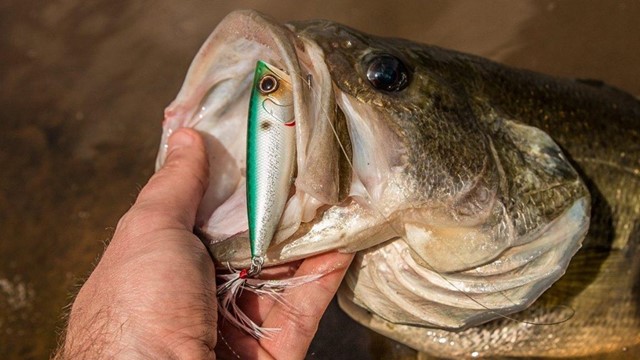
The James and Chickahominy Rivers boast strong largemouth-bass fisheries that attract anglers from across the country and play host to tournaments of varying sizes. Large tournaments typically launch from the James River, which offers excellent bass fishing. It also connects anglers with adjoining waters, such as the Chickahominy River.

Because of Chickahominy's reputation as a productive fishery, many anglers travel between it and the James to fish. As a result, during 2020, invasive Alabama bass were detected in Diascund Creek, a tributary of the Chickahominy. Additional detections of Alabama bass have been reported in the Chickahominy.

In April 2021, the Virginia DWR began a largemouth-bass tagging project to assess fish movement between the James and Chickahominy Rivers. The goals of the project are to estimate translocation between the rivers, assess the impact of translocation on the Chickahominy bass population, evaluate Alabama bass-dispersal vectors, and understand fish distribution post-release by anglers. This in turn will inform DWR management decisions, such as if and when stocking may be required to maintain the quality of the largemouth-bass fishery and identifying areas for Alabama-bass monitoring.

DWR tagged 648 preferred-size (greater than 12 inches) largemouth bass throughout the Chickahominy River with red-dart tags and monitored movement via angler reports and partnerships with B.A.S.S. and the Bass Federation to identify tagged fish at tournament weigh-ins.

Over the past year, DWR biologists were able to determine that largemouth-bass movement between the James and Chickahomy Rivers is largely driven by tournaments. This is because non-tournament anglers targeting Chickahominy bass overwhelmingly launch from and stay within the Chickahominy.

Despite this pattern, biologists found only 3.4 percent of largemouth bass were moved from the Chickahominy to the James River as part of large tournaments. Non-tournament anglers were responsible for 0.3 percent of observed translocation to the James River. Additionally, reported tagged bass released in the James River by anglers were later reported as being caught in the Chickahominy. Because of the long distance (greater than 35 miles), it's likely that these fish were translocated by anglers. However, this indicates movement in both directions between the two rivers.

Biologists also used data from creel surveys and field sampling to estimate the abundance of preferred-size bass in the Chickahominy River, as well as estimate the percentage of fish that are vulnerable to being caught and moved to the James River by anglers throughout the year. Overall, 12.5 percent of preferred-size largemouth bass were considered vulnerable to being moved from the Chickahominy to the James by anglers.

It's important to note that the 12.5 percent of vulnerable bass reflects the percentage of fish that are at-risk of being caught and translocated and represents an estimate of the maximum percentage of translocations. The observed percentage of bass translocated from the Chickahominy to the James was 3.7 percent over the course of a year.

Translocations by tournament and non-tournament anglers are very low, relative to the size of the bass population, and are not expected to negatively impact the Chickahominy largemouth-bass population.

Thursday, April 14, 2022

"Just One More Cast"...What Does It REALLY Mean?

Probably about the only time you can take it at face value is when you're married and have taken your mate fishing with you. Especially if she's a non-fishing person, she very well may be sitting there armed with a treble hook ready to sink into your rear end if you don't start moving toward the car.

In situations other than that, however, "just one more cast" is apt to have various meanings, e.g., one more hour, one more fish, 'til sunset. In short, it may mean "we'll probably be fishing longer than originally planned."

More importantly, "just one more cast" symbolizes the optimistic attitude necessary to outwit a fish that might not be hungry. It also speaks to the perseverance it takes to be successful in a sport where the opponent (the fish) is not always visible.

There are times when the "just one more cast" mindset has turned a bad day's fishing into a good one. Most of the time, it's a good excuse to extend the fishing trip, simply because it's fun to be on the water. When one considers the alternatives, such as doing yard work or cleaning out the garage, it's no wonder so many choose to fish longer.

As one veteran angler allowed, "It's really interesting how many times the last cast of the day produces a fish, and often, the biggest fish of the trip. The other day, for example, I took a few youngsters crappie fishing. Two of the three had caught several 13-inch or larger fish, while the other one only had a few that were closer to eight inches. When it came time to pull the fishing lures in for the final time, the third youngster made one more cast and, yes, caught a 17-inch crappie...the largest fish of the day."

Many believe that the last cast has a very high likelihood of hooking a fish. Conversely, though, catching a fish on the first cast of the day is said to bring bad luck for the rest of the day.

Wednesday, April 13, 2022

Remembering a Fishing Trip From Nearly 50 Years Ago

No, this isn't one of my tales. Rather, it's one that I found during some Internet research and decided to share.

The year was 1973, and a fella (named Don) was fishing Lake Millwood in southwest Arkansas. The conditions there at the time was described like this: "The weather was hot, the water was hot, but best of all, the lake was really hot. When you found the bass, it was one after another, cast after cast."

Don said, "All my life, I had fished with a Zebco spinning reel. However, earlier that year, my friend, George, had dragged me kicking and screaming into the world of baitcasting reels. Having grown up casting right-handed and reeling with my left, I had a lot of trouble adjusting to the traditional right-hand baitcasting reels. Earlier that week, I had broken down and bought a new Ambassadeur 5100C (left hand) reel and a new rod to match. I don't recall the price, but at that time, it was a lot of money for me."

Don went on to explain that he and his friend had taken the 60-mile trip to Lake Millwood, towing the friend's 16-foot Ranger with an at-the-time "monstrous" 115-hp motor. The friend was introducing him to the lake.

"George told me to tie on a black worm with a blue tail," noted Don. "Then he dropped the trolling motor and found one of his hotspots: an old creek bed about 7 feet deep."

"You go first," said George. "Just throw it on the other side and slowly let it fall into the creek."

Don did as he was told and immediately felt a small tap, then nothing. The line went limp, so George told him to "set the hook hard."

He did and subsequently thought he was hung up. As Don relaxed, the fish pulled back at least as hard as he had set the hook. In an instant, the rod and reel were gone...jerked completely out of his hand by an offended, irate largemouth the size of which I only had heard about. The fish did a victory leap right in front of them, as if to say, "I win this one, sucker!"

Soon the water was calm, with not a ripple. The air temperature was nearing 100, "and I'm sure my blood pressure was nearing 200," said Don. "I wanted to cry...my brand new rig was gone after just one cast."

In case you're wondering, the story doesn't end here. It actually gets better. Turns out George had brought several backup rigs.

"Here, tie on some of these and try to snag the line or rod," said George, handing him some Mudbug lures (see accompanying photo).

They had to pull these baits really fast to get them to dig the bottom of the creek, and George finally hooked something. While it wasn't the missing rod and reel, it was a nice 2-pound bass. Soon after, Don also hooked a fish about the same size, and for the next 10 minutes, they both sat there pulling in bass...all nice fish, but nothing like the one that had gotten away earlier.

Suddenly, though, the bite turned off, and George speculated that the rod had been dragged too far away for the Mudbug dredging to work. Not wanting to give up just yet, Don made one more cast with the diving lure and got hung up in the process. George then maneuvered the boat over closer to get the bait back.

"As I picked up the line with my hand," said Don, "I felt a vibration and a slight pull. I started reeling again and found my Mudbug hooked to another line. In sheer excitement, I grabbed the line and started pulling it in, completely forgetting about the fish. I was too busy thanking George and whoever else was within yelling distance."

Soon, Don had hold of the lost rod and felt the weight of a totally exhausted 7-pound bass on the end of it. They figured the fish had looped the line around something and fought until it had worn itself out.

As Don explained, "I don't think there is a moral to this story, except maybe that good things happen to unworthy people occasionally. I still have the reel...some 36 years later...in a place of honor in my garage. I turned the big fish loose, but the others we caught made great fillets."

Monday, April 11, 2022

Finally...A Decent Fishing Day

I had begun thinking I had PO'd the fishing gods good this time, after repeated outings with absolutely nothing to show for it but a bruised ego.

Before I get into that, though, let me bring everyone who's interested up to date on a different matter...that being the sale of West Neck Marina. Per the notice I saw today in the window of the marina store, the new owners are Bethany and Jimmy Vaughan. The notice goes on to say that no immediate changes are planned.

Unfortunately, the new owners didn't provide an address for mailing checks to pay your storage fees, so until one is forthcoming, I reckon we're left with two options: Send monthly payments to them at the marina's address, which is 3985 West Neck Road, Virginia Beach, VA 23456, or put your checks in sealed envelopes and drop them in the metal box beside the store's front door. If you happen to find the new owners around the premises, you also could hand the money to them directly.

Now for my fishing day. It started with a bit of a hiccup. Seems I had remembered to perform all the necessary preparations, save for looping one end of the launch rope over the stanchion on my trailer. As a result, the end had fallen in the water and was drifting away by the time I walked around the van and got hold of it, and tied the boat off at the ramp.

From there, it was a short ride south for what I had hoped would be some topwater action. After throwing a popper for an hour, though, I had yet to have the first strike, so I put that rod down and picked up the one with a spinnerbait tied on. Things started happening then.

In no time, I had found two 1-pounders on back-to-back casts. A bit later, I added a 1-9, then capped off the day with a 1-15. The bright sun was directly in my eyes when I hooked that last fish of the day, and even with my sunglasses on, I couldn't tell what it was for a few seconds as I fought to get the sun out of my eyes. Admittedly, I thought it was a bowfin until I got my first clear look. Had a good hookset, however, and soon boat-flipped the bass.

As I idled alongside the dock at day's end, my friend, Rob C. showed up in time to back my trailer down the ramp, then pull me out once I had secured everything. All in all, it was a good day, compared to the last several outings I've had. Will settle for 4 any day of the week, especially when they're all keepers.

Sunday, April 10, 2022

Deeper Water May Still Be Working for Some Anglers...

Others, though, are beginning to find success in the shallows. Talked to a friend just yesterday, who had been out for a couple of hours in the early morning with another fella and found success with their topwater baits. Also overheard some anglers at the Dewey Mullins Memorial Bass Tourney last Sunday talking about the topwater action they had enjoyed.

Topwater bass fishing, as we all know, is one of the most popular techniques in this sport. Few things equal the joy of watching a big bass come out of its environment and attack your lure. It just never gets old.

The warming temperatures of spring offer anglers of all skill levels a first-hand opportunity to experience this adrenaline rush. As the bass move to and from their annual spawning grounds, topwater lures are a sure-fire way to elicit some vicious reaction strikes.

A basic question everyone has to answer first, though, is: What lure do I throw? According to Wired2Fish writer Walker Smith, there are five that he recommends anyone should keep in their collection, starting with frogs.

"Big bass have a hard time turning them down," he said. "Although you may not always catch a lot of fish with these hollow-bellied lures, the bites you get are likely to be the "right" ones. If you keep it in your hand long enough, your perseverance will be handsomely rewarded.

"While you'll have a good chance of finding a solid frog bite whenever the water temps exceed 55 degrees, these lures often are at their best throughout the post-spawn period," he continued. "As the bass protect their newly hatched fry, they become incredibly territorial, and the walking and spitting of a hollow-bellied frog is difficult to beat.

"Willow trees and other types of brushy, overhanging cover are excellent targets for topwater frogs. It's also a good idea to target the front of docks.

"There's rarely any doubt when a bass eats your frog. While some may discretely sneak up and slurp it down, the vast majority of bites will be quite dramatic. When you see the explosion, give the bass a half-second or so before setting the hook in order to make sure they are connected with it, then set the hook upwards as hard as you can."

Another tried-and-true choice throughout much of the year, but especially in the spring, is poppers. While they're not ideal for thick cover, due to their treble hooks, they are a force to be reckoned with when used in fairly open-water scenarios. They can be used comfortably with either casting or spinning gear.

"You'll have your best luck with topwater poppers in isolated cover during both the spawn and post-spawn periods," noted Smith. "As long as the water temperatures are in the 60-to-75-degree range, it's a good idea to have one rigged up and ready to cast. These lures are especially effective when fished over bedding areas. They also disturb groups of post-spawn fry, which forces otherwise lethargic bass to bite out of pure reaction.

"Stumps, corner dock posts, outside grass lines, and sparse laydowns are high-percentage targets, but don't rule them out around the late-spring shad spawns, either. Most of your targets will be in close proximity to spawning flats, so focus your efforts on shallow, south-facing pockets with a sandy or firm bottom composition.

"Popper bites aren't always overly aggressive, so it's important to keep steady visual contact with the lure throughout your retrieve. Some bass will go completely bonkers on the bait, but some of the bigger fish will suck it underneath the water with very little fanfare. Forget a dramatic hookset; just sweep your rod to the side, much like you would with a crankbait."

While prop baits may seem like they're designed for a steady surface retrieve, they're most effective when fished just like a topwater popper...a few small twitches, followed by intermittent pauses. And, as explained by Smith, "They're an excellent choice around shallow bass beds, post-spawn bluegill beds, and even cruising wolf packs.

"When you find yourself in the back of a spawning pocket," he continued, "be sure to make specific target-oriented casts to any dark areas you see, including stumps, vegetation, or even small rocks. Shallow bluegill beds perhaps are the best springtime targets for prop baits because, as the big post-spawn females are recovering from the rigors of the spawn, bluegill represent an easy and nutrient-rich meal.

"Many prop-bait bites will be very similar to topwater popper bites, but it seems as if prop-bait bites can be even more subtle at times. Expect bites that you won't even hear or see...the lure just simply disappears. A winding sweep is all that's needed to the large majority of your bites."

Another topwater lure recommended by Smith is the buzzbait. In his words, "It's a remarkable tool for quickly covering large areas of water and remains one of the best big-bass baits in existence. They can work almost all year long, depending upon your location. And it's not unusual to see outstanding buzzbait catches in water as cool as 48 degrees or as hot as 85 degrees when the bass are very active.

"A relatively quick, steady surface retrieve makes them a solid choice when you're searching for a productive spring pattern. Fan cast them over large spawning flats, make short pitches to isolated cover, and target pre- and post-spawn staging areas.

"There's no such thing as a stereotypical buzzbait bite, but because of the constant tension and contact with the lure throughout your retrieve, they won't be hard to detect. Braid is a good choice of line due to its lack of stretch. Whether the bass explodes on your lure, or simply sucks it under, just keep tension and speed your retrieve, and you'll enjoy a healthy landing percentage."

Smith's last recommendation is a soft-plastic toad, which is often overlooked in favor of fancier and/or flashier offerings. While some anglers utilize a steady retrieve to allow the toad to spit and sputter on the surface, others actually will allow the bait to sink into small holes to fool big bass. "Regardless of your preferred method, the bass will inhale these baits," Smith assured.

"You may not get many bites on the toad throughout the prespawn period," he continued, "but it's certainly worth trying when the water is above 55 degrees. Once the spawn begins, toads are red-hot all season long.

"With the efficiency of a buzzbait and the weedless qualities of a hollow-bellied frog, soft-plastic toads excel at covering vast expanses of thick cover in a short period of time. Grass lines, grass mats, stumps, potential bedding areas, and underneath docks are all fair game for these baits," Smith concluded.

Can only speak for myself, but you can bet I'll be tossing topwaters for the foreseeable future, especially during the early morning.

Friday, April 8, 2022

A Good Deed Designed to Plant the Fishing Seed

Read the account of an angler who, like a lot of other folks, prefers having a lake or area to himself when he's spending a day on the water. As I also learned, however, this fella always has a soft spot when it comes to kids, especially those who are trying to learn the sport.

"Their interest in fishing, no matter how short-lived, due to the usually short attention spans of children and/or other distractions," he noted, "can be stoked with a little success and the realization that results are within their grasp, based on their decisions. Friends and family alike can have a hand in this process."

He went on to describe a scene he had happened upon a couple of days earlier while fishing the eastern side of a cove on one of his favorite lakes.

"I saw a dad helping his two sons and a daughter fish off their dock at the back of the cove," he said. "It was like he was trying to keep plates spinning while he ran from kid to kid. Meanwhile, they were casting over each other's lines and trying to figure out how to work the reels.

"It was all kind of humorous," he continued. "In the 20 minutes or so it took me to get closer to their dock, I caught three bass, which as would be expected, caught the kids' attention. After the third one, the dad asked what I was using for bait. Even though I was tossing a Ned Rig, I thought it might be easier for the kids to use a wacky-rigged Senko...and likely would net results, too.

"I  motored over to their dock and was going to give them a pack of worms when the dad exclaimed, 'Oh, those are YamaSenkos...we have some of those.' So I spent about two minutes showing them how to wacky-rig the worms and told them that the bass weren't really chasing today, and thereby showing them how to fish it slowly.

"I mentioned that the bass were getting ready to spawn, how they would be moving shallow, and some different areas they should cast to. I looked over at the oldest boy (about 10) and told him that he likely wouldn't feel a strike from the fish but rather just see his line moving."

After spending no more than five minutes helping them, the Good Samaritan motored away in the opposite direction. He was still within earshot, though, when the heard the 10-year-old yelling, "Dad! Dad!" The fella turned and looked, just in time to see the oldest boy hook his first bass. His mom was videoing the whole fight, and they took a bunch of pictures afterward, then released the fish.

"I gave the boy a sitting ovation from about 50 yards away," said the angler. In return, the boy waved and yelled, 'Thanks for the help.'

"With the seed planted," said the fella, "it will be interesting to watch over the next few months and see if the boy is bitten by the fishing bug, or if this was just a cool moment he got to share with his parents, brother and sister."

Tuesday, April 5, 2022

Remembering the Way It Was Back in the Day (Part 2 of 2)

(From a California angler) I bought my first baitcasting reel, a Langley Lure Cast, at age 9 from money I had earned doing chores. A Garcia Conolon rod was my birthday present. I still have the reel and wish I had kept the rod.
     Caught old "Moses," my name for a big 7-pound bass, in the summer of 1953. It took me over a year to catch that wily ol' bass, and I learned a lot about bass habits watching Moses and trying to figure out how to catch her. I finally pulled it off by using a small live crappie. I was so excited. Took the bass home, and we ate her. Moses would be the last trophy bass I intentionally would kill.
     I learned to bass fish while walking the shoreline and rowing a small wooden boat. My tackle was the rod and reel already mentioned, using Ashaway line and these three lures: jointed Pikie, Jitterbug and Hawaiian Wiggler No. 3. It wasn't until a family vacation to Shasta Lake in '55 that I discovered Creme rubber worms...the rigged worm with two hooks, a bead, and a small propeller. I already had learned about Doll-fly jigs and black pork rind by then.
     On another vacation--to Lake Havasu in '58--I learned another lesson: Live waterdogs catch big bass, too! While waiting for my brothers to buy gas, I caught the big bass under the gas dock on a waterdog the old owner of the bait shop had given me to try. That 11-pounder was a lake record...back then, at least. Don't know if it still is today. I now was obsessed by the desire to catch the next world record.

(From a Michigan angler) I was lucky enough to be born in 1943 and raised on the banks of what, in 1957, was said (by Field & Stream) to be "the best smallmouth stream in the eastern USA (Rockcastle Creek in Martin County Kentucky).
     I caught my first fish, a sunfish, with a stickweed for a rod, sewing thread for line, and a bent straightpin for a hook, and worm for bait when I was about 3 years old. I have fished ever since.
     I lost many relationships with females because of my fishing and hunting...so be it. I now have fished more than 63 years and hope, when my time comes, I will meet my maker with a rod, gun or bow in my hand.

(From an Ohio angler) I was born in 1942 and lived a short walk from the Ohio River. My dad, brother and I used to go there two or three times a week.
     They had metal rods, with some sort of casting reel and black line. I don't know what they were, but they had to be cheap, because we were poor. I used a branch cut from a willow, with string from the grocery store that was used to wrap meat, and a small hook.
     While they fished for catfish, I fished for shiners. I can't remember how old I was the first time I went...4, 5 or maybe 6. I can remember using a Pflueger tandem spinner and a Shannon twin-spinner, as well as a Flat Fish and Lazy Ike. An old neighbor gave me a tackle box with some Pikie minnows, Go Deeper Crabs, and a Bass Oreno plug. I caught bass on all of them.
     The guys with money used solid fiberglass rods and Pflueger Supremes...with everything made in the USA. Anything from Japan or elsewhere was just junk.
     I went from sitting on a muddy river bank to wading creeks in my bare feet to my first johnboat, and then my first bass boat. I fished tournaments for some 20 years, including the Ohio Bass Federation state tournaments. I got so tired of the tournament crap I won't even go to a weigh-in now. Through it all, I had fun, learned a lot, made a lot of friends, and got to watch all the technological advances. It has been a sweet ride, and I ain't done yet.

(From a Colorado angler) Ahhh!...my first casting reel. Remember those exciting (to a 10 year old) ads in the back of magazines for the "100 piece fishing kit"? The picture was of a casting reel, lures, hooks, stringer, swivels, split shot (all counted individually), and probably other exciting things laid out in front of a tackle box. I think it cost $12.95.
     My friend John and I each saved our lawn-mowing money for that kit. And then came the day the packages arrived, both addressed to John's house, so we could open them together. I remember the ad and that box really well. All I remember about the contents, though, was how cheap it all was. And that reel...we wanted to love it, but it obviously was not built to be loved.
     It would only cast about 15 feet, and that was with all the sinkers and lures in the box tied on at the same time. We were crushed, but we learned a dear lesson about "buyer beware."

(From a Kansas angler) I started fishing with my grandfather sometime around 1958, catching bluegill and bullheads with a cane pole and worms. As I became more proficient, I moved up(?) to a Zebco 202...along with channel cats and bass.
     Grandpa gave me my first casting rig, a Shakespeare model 1920 reel and a tubular steel Wonder rod. He also taught me (with infinite patience) how to cast a plug. The first bass I caught on a lure was with that rig, while throwing a Lazy Ike. That old rig has a place of honor in my shop.
     After high school, I went nuts for bass fishing, spending every available hour fishing. I went through the usual assortment of tackle...Abu Garcia 5000, Mitchell 301, the original Daiwa Millionaire, Pflueger Supreme, Shakespeare 1980 President II, etc.
     Circumstances almost forced me to give up fishing in the late-1980s. An industrial accident left me with some physical issues affecting my mobility and balance, and a divorce shortly afterward left me broke, but I've returned to fishing recently...restricted pretty much, though, to fishing from the bank. These days, my greatest joy is teaching my grandkids to fish.

(From a South Carolina angler) Was born in 1955. My best early memory of bass fishing was when I was about 8 years old and wading a waist-deep gravel pit. I was throwing a wooden frog-colored Creek Chub Darter (an old lure left in an old box) around some vegetation. Fished it on a state-of-the-art Mitchell 300 that my dad had traded for a case of home-brewed beer...really good stuff! I was jerking it when a nice bass hit it and came up jumping, then buried deep, pulling hard all the while before spitting the bait. When I looked at the lure, the hooks had been pulled completely out of the bait. Have been hooked on bass fishing ever since.

(From a Florida angler) I'm a November 1941 baby, who started fishing when I was about 14. As I recall, it was an uncle who had given me one of those knuckle-buster reels and a solid steel rod with 30-pound black dacron line. I also bought about 30 or 40 steel leaders, put perch hooks on them, and caught a ton of bluegill, along with a few bass. Got a red and white Daredevil and caught some northern pike. While casting that, I learned how to "thumb" a reel.
     When the crappie started hitting the mayfly hatch, my brother and I got a couple of cane poles, put some of that 30-pound black dacron line on them, and used a white popper to go "fly" fishing and catch a lot of crappie.
     Now I need a second boat to carry all my tackle and don't catch near as many fish. Might have something to do with no one else fishing where we did.

(From a whereabouts-unknown angler) I guess I'm really lucky. I'm 47, and my dad and his uncle were the first people in the country to have baitcasters, so I could throw one of those old Shakespeares before I could ride a two-wheeler. However, I do miss how simple and relaxing fishing was back then. All I had to do was grab my old baitcaster and my fishing hat that held all my spare lures (a Hula Popper and a spinnerbait). I kept a Lucky 13 tied on and tried it first while walking the banks of oxbows and rivers, catching fish all day.

Sunday, April 3, 2022

50 Percent of Field Weighs 5-Fish Limits


Today's tournament saw 23 anglers in 13 boats show up and compete for bragging rights. At the end of the day, 49 fish were brought to the scales, with a total weight of 91.65 pounds, and an average weight per fish of 1.99 pounds.

Winners today included the following:

1st place went to the team of (from left) Chris Napier and Jobie Walker, with five fish and a total weight of 13.33 pounds. Their big fish weighed 5.23 pounds, which was good enough to claim the lunker pot. They also won the side pot.

2nd place went to the team of (from left) Don Carter and Rob Peppers, with five fish and a total weight of 12.81 pounds. Their big fish weighed 4.76 pounds.

3rd place went to the husband-wife team of Andy and Diana Morath, with five fish and a total weight of 11.44 pounds. Their big fish weighed 3.48 pounds.

4th place went to the team of Bobby Moore and J. P. Twohig (not pictured), with five fish and a total weight of 10.64 pounds. Their big fish weighed 2.75 pounds.

Here is how everyone else lined up at day's end:

     * The team of Dave Anderson and Gary Coderre, with five fish and a total weight of 10.34 pounds. Their big fish weighed 3.08 pounds.
     * The team of Dennis Dean and Steve Bailey, with five fish and a total weight of 9.99 pounds. Their big fish weighed 2.50 pounds.
     * Rusty Girard, with five fish and a total weight of 6.01 pounds. He didn't weigh a big fish.
     * The team of Wayne Hayes and Ken Testorff, with three fish and a total weight of 5.69 pounds. Their big fish weighed 3.35 pounds.
     * The team of Ken Mathias and Jim Leavis, with four fish and a total weight of 5.13 pounds. They didn't weigh a big fish.
     * The team of Fred Crawford and Gabe Himmelwright, with three fish and a total weight of 5.04 pounds. They didn't weigh a big fish.
     * The team of Rob Chatham and Craig Jones, with one fish and a total weight of 1.23 pounds. They didn't weigh a big fish.
     * Solo anglers Skip Schaible and Chris Fretard didn't weigh any fish.

Congratulations to all of the winners and thanks to everyone who came out to participate. For planning purposes, our next event is scheduled for Saturday, April 30, from safe light (about 6:30 a.m.) to 2:30 p.m. I hope you can join us.

One Last Cast

As Wayne and I were working our way out of West Neck Creek this morning, we happened upon what you might call some "unhappy campers"...not the kind you would think of in a traditional sense, though. Instead, you might say these were "birds of a feather that simply couldn't get along together."

The problem was this. A stray Canadian goose had...for whatever reason...decided to take up temporary residence in the vicinity of an old dead tree in the creek. Unfortunately, this particular tree, like many others in the area, had a giant osprey nest in the top. And it just so happened that both Mom and Pop Osprey were home.

Wayne and I both heard a commotion in the distance at about the same time, stopped fishin' for a moment, and turned our heads in the direction where the noise was coming from. Let's just say you would have had to be nearly deaf to ignore what was going on.

What we saw was this goose paddling around in the water, working its way ever closer to the base of this tree. Meanwhile, Mom and Pop Osprey had left the nest and taken up a position in a nearby taller tree, from where they had a clear view of exactly what was going on...and could go into full attack mode.

Wayne and I watched, as first one, then the other, osprey would swoop ever so gracefully from their perch in the taller tree and dive-bomb the Canadian goose who, for protection, would try...quite unsuccessfully, I might add...to dive below the surface of the water. Each time, as the goose realized it wasn't gonna be able to dive, would resort to the next best thing: squawking loudly and paddling wildly in a direction away from whence the osprey's attack was coming.

With these constant attacks, coupled with the fact that Wayne and I were getting ever closer to the scene of this action, the Canadian goose eventually decided the better part of valor was simply to paddle on out of the area, and calmness once again returned. Wayne and I each made a couple of casts, with the ospreys just watching us closely as we passed, then settling into their happy home.

Current Overall Statistics

Wednesday, March 30, 2022

Out of the Game, But Still Has His Aim

That phrase describes my long-term friend Jim Bauer (right).

Yeah, it's been a couple years now since he regularly prowled West Neck Creek with his Skeeter in search of bass, but that in no way has affected his love of the sport. I can assure you that, if it hadn't been for a whole long series of health issues, this man we know with the handlebar mustache would have been right alongside all of us slinging his share of baits.

How do I know this? Because I talk to him on a regular basis. And then, too, I received a lengthy email note from him today, in which he described an incident that occurred recently at his house.

Seems he had spotted a limb from one of the trees in his yard laying on the roof, and he was intent on removing the unwanted obstacle...by whatever means necessary. It didn't take him very long to come up with a plan.

As Jim explained, "I actually had a baitcaster in my hand last week. I admittedly was a bit rusty, but I managed to prove that it's possible to move a good-sized tree limb off a roof with it, even though I had to make a few more casts than what it used to take me to snatch a tree limb on the bank.

"I had a retired rod/reel combo here that I blew the dust off of," continued Jim, "and after tying on a couple worm weights, went to work. It was far enough up the roof that I couldn't reach it from the ground. Had to clear a few bird's nests in the process, but finally got the weights to tangle around the limb and slowly pulled it off the roof.

"When my mission was complete, I retired the combo back to my rod rack," he concluded.

Having gotten a couple chuckles out of this account, I decided to share the experience with everyone. Folks still ask me about Jim, and I'm always more than happy to share what I know.

This much I can tell you with certainty: If/when he gets all his health issues under control, he will get back on the water with all the rest of us. I, for one, will gladly welcome him back. He and I already have plans to spend a day or two on the water together when the topwater bite gets going.

Tuesday, March 29, 2022

Gatorade Is What You Drink...

Gator Aid is what you call when you need a free ride.
(Photo courtesy latest issue of Jay Kumar's BassBlaster)

Remembering the Way It Was Back in the Day

Got to digging around the Internet today and found a wealth of information about how some old- and not-so-old-timers got hooked on fishing. Following are their stories, as told in their own words. I plan to make this a two-part series.

From a New York angler. I started slinging plugs (as they were called back in 1960), with a Jitterbug my first lure ever. Amazingly, they still catch the tar out of 'em in low light. Most guys that fished then only had a few lures. My grandfather would roll over in his grave if he ever saw all my tackle and rods today, let alone my bass boat. Back then, most guys learned fishing from their dads or granddads like I did, not by reading about it, nor seeing it on TV, and we sure didn't have the Internet then. Times and things in those days were way simpler. There were only a few channels on TV, and at a certain time every day, programming was done, and all you could see until the next morning was a station's test screen. In 1960, our family only had one TV, and it was black and white. We had no air conditioning...in the family car or the house either one. However, we had a fan...and I might add, water coolers--both home-made and store-bought--were popular back then, too (LOL). I have fished intensely my entire life...have never put it down.

From a California angler. First time I ever fished was 1958, with a spinning rig bought at Thrifty Drugstore for $4.99...or thereabouts. At 10 years old, I hopped on a bus that took me to the nearest lake. The only lure I had was a Red Devil. I didn't even know how to cast the rig. I released the anti-reverse and slung it as hard as I could, only to end up hooking some man's arm. He popped the hook out (wasn't beyond the barb), then proceeded to teach me how to cast properly. I was in heaven and fished until the mid-80s. Then my folks got divorced, and that was the end of my fishing for several years. Luckily, I got back into it when my son bought me a nice spinning rig for Christmas in 2008. He's been fishing since he was about 9 years old.

From a Pennsylvania angler. I was fortunate that my dad and uncle were really into bass fishing throughout the 40s and 50s. My first dedicated bass-fishing trips began in the early 60s. I remember many Zebcos, Mitchell 300s, and old red Ambassadeurs. I spent a lot of time growing up on my uncle's cattle farm that had a private pond. It was my personal playground. I fished it anytime I wanted...day or night. Fast forward to the late 70s, when I got so wrapped up in fishin' that I lost a wife, a house, and two jobs, and developed a few personal problems. Started a guide service, then developed some more personal problems. Fished Jitterbugs, Johnson Spoons, Snagless Sallys, Bill Plummer's bass frog, Burke flex-o-lure, Storm Thin Fins, Dying Flutters, Devil's Horses, Dalton Specials, Buck Perry Spoonplugs, and No-Bo line back then. Caught many large fish on all of them. Used Herter's catalog to order 50 assorted lures from Sports Liquidators for $19.95...as I recall. Got some of those big ol' plastic worms that had ridges on them and two weedless hooks. Looked kinda like a piece of tire tread. That's when fishing was about fishing. Today, it's about fishing and money. I see guys on TV roughing up the fish, hootin' and hollerin', high-fivin' and screamin' at the fish...and G-man doin' a high-speed pass on Randy Howell whilst he's fishin'. I really don't understand it. To me, it's just all common buffoonery. I've been doin' it about five decades now...three decades at 150 to 200 trips a year. I'm wore out, my elbows and wrists are worn out, and my boat's wore out. I'm tired of runnin' and gunnin'. I do, however, still manage to squeeze in well over a hundred days a year. There are five lakes, all within 10 minutes of where I live.

From Massachusetts angler No. 1. I started fishing in the mid-40s, using a bamboo pole, kite string, a cork bobber, a hook, and a tin can to carry my worms I dug up in an old, long-neglected orchard on my way to the pond. The first rule back then was to make sure the worm hid the point of the hook, so the fish couldn't see it.

From Massachusetts angler No. 2. Caught my first largemouth on a shiner and a $2 rod, with a fly reel given to me by a neighbor. That got me hooked. Have seen a lot of stuff come and go. I still have a tubular steel baitcasting rod (Heddon Pal) and a Pflueger "Silk Cast" knuckle-buster reel. My dad bought me a Heddon Lucky 13 (the old wooden kind) for Christmas one year, and I still have it. Times certainly have changed...some for the better, and some for the worse.

From Massachusetts angler No. 3. Times have indeed changed. I'm not sure I enjoy it any more than I did as a wide-eyed youngster of five, but it sure costs a lot more to do it. I remember going to the hardware store, where the bamboo poles were standing in an empty nail keg. These kegs are long gone now. We tied kite string to the tip of the rod, leaving a long tag end, which was secured along the rod from the tip to the stouter portion of the bamboo with a series of half-hitches. When...not if...the tip broke, you still had your line, bobber and hook. The cork was slit lengthwise, about halfway through. We slipped it over the line, then slid it up and down to adjust the depth of the bait. The biggest fish I caught in those days was a 16-inch pickerel, but I didn't catch it on that pole. I had put a shiner on my home-made stringer, made with kite string and a twig about four or five inches long tied to the string. We slid the twig between the gills and the gill plate, then out the back side. The twig prevented the fish from pulling off the line. We'd secure the stringer to a bush, rock, root, or whatever. Keep in mind this stringer was about 20 feet long, so it was more like a leash, which allowed the fish some freedom to swim about. On this day that I had put a shiner on that leash, I pulled it up when I got ready to go home and discovered that a pickerel had come along and swallowed the shiner. To me, it looked like a world-record fish, so I took it home to show off. Along the way, the pickerel slid off the shiner, but I got it home, put it in a wheelbarrow full of water, pulled up some tall grass, and put it on the water. Somehow, I thought the grass would keep the water oxygenated. After everyone saw the pickerel, I put it in a bucket and released it back into the pond (just a couple minutes' walk through the orchard), where it had been caught. It had managed to survive that ordeal.

Sunday, March 27, 2022

An Angler Who "Gave the Last Full Measure of Devotion"

Wired2Fish writer Walker Smith once introduced an article titled "The Power of Bass Fishing" with the following dialog: "Have you ever taken a long look into your heart, soul and mind and asked yourself why you love this sport? How is it that a little green fish with a pea-sized brain has such an unwavering hold on you? Maybe it helps you relax. Maybe it satisfies your competitive spirit. Maybe it's just all you've ever known. Or maybe, as in the case of 24-year-old Texas State University angler David Cosner, it literally helps you survive.

"I believe, with everything I am," continued Smith, "that God places certain people in our lives to teach us imperative lessons. Some of these people might teach us perseverance, while others may teach us how to love deeper than we ever knew possible. Today, however, an angel in the form of David Cosner taught me about perspective."

Unfortunately, after a long and very public battle with Wegener's granulomatosis, a terminal lung disease, angler David Cosner passed away at 29 years old. He was diagnosed with the condition two days after his 17th birthday. Not only did he attack the disease head-on and exhaust all medical efforts to beat it, but he also kept an inspiring and positive attitude until he took his last breath.

While sick, Cosner founded the Texas State University bass cub and competed for four years in the Carhartt Bassmaster College Series. He was an outstanding collegiate angler who excelled in many tournaments. But his main mission was to share his story through bass fishing.

In a conversation with Wired2Fish, Cosner summed up his disease in a few short sentences.

"I describe my disease like this," he said. "It's a liberating experience I wouldn't wish on my worst enemy. It has shown me how to live my life. We should all help others, enjoy everything, and never feel guilty about taking time off work to do something we love. Life is a fragile, fragile thing. It'd be weird if I wasn't a little scared, but at the same time, I've been blessed with a huge appreciation for life. The normal, small things that make most people angry just don't matter to me anymore."

Cosner made it his goal to fish the Bassmaster Central Opens in 2018, as he was determined to compete against some of the best anglers in the country. If you knew David, once he made the decision, he went full speed and wouldn't let anything, even a terminal diagnosis, hold him back. With oxygen tank in tow, he made a run at it while his father and best friend, Don Cosner, traveled with him to ensure his wellness.

Dozens of very prominent companies in the fishing industry flocked to show their support for Cosner's inspiring mission. Each and every company that offered help, whether product-wise or financially, promptly received a handwritten note in the mail from Cosner. That's just the kind of young man he was.

As Smith concluded, "We love and will sorely miss our friend. But we're so thankful he's free from this awful disease. We love you, buddy."

You can read the entire story behind David's journey by simply clicking on this link: https://www.wired2fish.com/opinions-philosophies/the-power-of-bass-fishing.