Saturday, March 21, 2015

I Can See Clearly Now

Yes, I know that's the name of a tune. However, it also describes the way I felt after researching and writing the blog article I just finished on George Perry and his world-record bass. Suffice it to say this experience has been a "dose of medicine" I really needed.

Here was a guy who shared not only an old homemade boat with his friend, but also his only rod and reel--even taking turns using it with his friend. And when he caught that fish of a lifetime, all he got for it, if I can believe what I read, was $75 from a big-fish contest he entered and a handful of freebie lures from the Creek Chub Bait Company.

There was no glitz or glitter, no fanfare, nothing but continuing the life as a farmer he had known up to that time. Hardly seems fair--you know what I mean?--even considering the fact it was during the Great Depression.

Then, I happened across an article written by bass pro Charlie Hartley, and some things he said got me to doing more thinking. He was talking about one of Dewey's best buds, ol' Woo Daves, the 2000 Bassmaster Classic champion. Charlie noted that Woo always pointed out in seminars that the surest way to catch a bass is with a simple Texas-rigged, straight-tail plastic worm. I can attest to that fact because I personally have sat through some of Woo's seminars.

Charlie then went on to say, "Too often, we (professionals) convey the idea that you have to have a lot of fancy--and expensive--tackle to catch bass. Even worse, we sometimes leave the impression that, without all the latest professional techniques and tricks, a trip is doomed. Why bother to go at all?"

Charlie was "spot on" in that statement, too. In one seminar I sat through several years ago, Woo Daves and Guido Hibdon both happened to be speaking, and I'll never forget one thing I listened to Guido specifically tell everyone in the audience. He said, "If you can't afford the best fishing equipment on the market, you might as well find something else to do, because you'll never be any good at it." At that moment, I lost any respect I might otherwise have had for that dude, got up (along with a lot of others), and walked away.

As Charlie acknowledged in the first of his two articles I read, "Sure, it's great to be a pro and treat this as a business. No one can deny the thrill of fishing for big bass on big water while chasing a check. Neither can anyone deny that high-end tackle and equipment are nice things to have, indispensable at my level, but that's not the case for most anglers. It's possible to have a good time and still catch bass, without busting the family budget at the local tackle store or knowing every trick in the book. We need to keep that in mind."

"Good on ya! Charlie," I was saying after reading that first article. "You, like Woo, at least have your head where the sun DOES shine."

Did I suffer a letdown when I read Charlie's second article? In a word, NO! Actually, anything but. You see, a friend had invited Charlie to join him for a Friday trip to a local bass lake that had a 10-hp limitation on the outboards. Charlie agreed, not knowing (neither did the host) that it was a local free-fishing weekend. The lake that Friday was covered with boats of all descriptions.

Was Charlie or his friend disappointed? Again, NO! Said Charlie, "Watching them fish was a real experience. They were having fun. It wasn't about competition, or money, or much of anything else. It was about laughing, giggling and feeling the pull of a big 'un on their line."

Charlie and his friend enjoyed themselves so much that, when the friend asked if Charlie would fish an open tournament on the lake with him the next day, he agreed without so much as blinking an eye.

"It was refreshing to see people fishing a tournament for the sole purpose of having fun," Charlie noted afterward. "They were trying to get away from their jobs, not working at them. That attitude carried through to the weigh-in. Sure, there was disappointment, but it wasn't the same. The stakes were nowhere near as high."

As it turned out, members of Charlie's old fishing club were on hand that day, helping carry fish from the scales for release back into the lake. Naturally, they all had a million questions for Charlie, and he answered every one of them.

"I told them what I could," he remarked. "What I didn't tell them, though, was how much I envied them."

In my opinion, there's a lot of good to be said for people like Charlie Hartley, Woo Daves, and George Perry. They have added meaning to the sport, as well as to the lyrics of that tune I used as the title to this piece. In case you're not familiar with the tune, here are the lyrics, as composed by Johnny Nash:

I can see clearly now, the rain is gone,
I can see all obstacles in my way
Gone are the dark clouds that had me blind
It's gonna be a bright (bright), bright (bright)
Sun-Shiny day.

I think I can make it now, the pain is gone
All of the bad feelings have disappeared
Here is the rainbow I've been prayin' for
It's gonna be a bright (bright), bright (bright)
Sun-Shiny day.

Look all around, there's nothin' but blue skies
Look straight ahead, nothin' but blue skies.

I can see clearly now, the rain is gone,
I can see all obstacles in my way
Gone are the dark clouds that had me blind
It's gonna be a bright (bright), bright (bright)
Sun-Shiny day.

The Day When a Single Cast Made History

It was June 2, 1932, when then-20-year-old angler George W. Perry (left) caught the world-record, 22-pound 4-ounce bass from Montgomery Lake, an oxbow of the Ocmulgee River in Telfair County, GA. He caught the fish on a natural-scale finish Creek Chub fintail shiner--the only lure he had in his tacklebox.

Before going any further, let me acknowledge a couple of related feats. First, while Perry alone held that title for 77 years, July 2, 2009, signaled the start of a new era. On that date, Manabu Kurita caught a 22-pound 4.97-ounce bass from Japan's Lake Biwa and was declared to have tied the world record.

I'm also well aware of the 25.1-pound bass that angler Mac Weakley foul-hooked, weighed (but not on certified scales), photographed, and then released March 23, 2006. He caught the giant fish at Dixon Lake in Escondido, CA, but decided not to enter it as an IGFA world record. In May 2008, then, that fish was found floating belly up in weeds--apparently having died after spawning. Weakley identified the fish from a telltale black spot located above its gill line.

A fintail shiner--not the one Perry used, though.
Those latter two facts aside, I'm concentrating this story on the legendary Perry and, to a small degree, the Creek Chub Bait Company (CCBCO) of Garrett, IN, which made the lure he used to catch his world-record bass.

As Perry described that historical event in a 1969 interview, the thing that first got his attention was a disturbance near a shallow stump. "I made a cast to it, and all at once, the water splashed everywhere. I remember striking, then raring back and trying to reel, but nothing budged," he continued. "I thought for sure I'd lost the fish--that he'd dived and hung me up. I had no idea how big the fish was, but that didn't matter. What had me worried was losing the lure."

The photo that surfaced in 2006.
As it turned out, the fish wasn't hung and soon moved. A brief battle ensured before Perry lifted the fish into the boat with both hands.

The story goes on that, when Perry took his fish into town, someone told him about a big-fish contest Field & Stream magazine was running. Having decided to enter this contest, he got the fish weighed (on a set of certified post-office scales) and measured, then took it home, where it was cooked and served for dinner the next two nights--after all, it was the Great Depression. He subsequently was notified that he had won the contest prize, consisting of $75 in sporting equipment.

Unfortunately, no one ever yet had seen a photo of the record catch when Perry, a pilot and mechanic, died in a 1974 plane crash at the age of 61. Bass-fishing fans everywhere only knew there were some rumors circulating that a couple of photos had been taken of the fish.

The photo Baab received in a June 2013 email.
Finally, in 2006, a photo surfaced, showing two unidentified people holding what is reportedly Perry's bass. The whereabouts of the other photo, however, remained a mystery until June 2013, when Atlanta Chronicle longtime outdoors writer Bill Baab received an email, including an attached photo dated June 2, 1932, of Perry holding a huge bass, along with a message that read: "Happy Anniversary."

The email's unidentified sender claimed to be a descendant of a fishing buddy who was with Perry when he caught the world record. The sender said the photo was found in a barn the family owned in Florida, but then declined to answer any questions the recipient might have.

Baab subsequently went on record as saying he was sure the man in the emailed photo was Perry. However, he couldn't say if the fish was his world-record catch, or if the photo had been altered.

It may never be known conclusively if either/both photos are the real deal, but this much we do know: George Perry's June 2, 1932, fish still remains in the record books and will continue to do so until someone perhaps breaks it one day.


According to my research, Perry had Jack Page, a fishing buddy, in the homemade boat with him the day he caught the world-record bass. They kept this boat at Montgomery Lake. And they always carried a single True Temper rod, Pflueger reel, and, of course, the Creek Chub fintail shiner lure. Their standard practice was for each to take a turn casting, while the other sculled the boat.

Over the years, from their inception in 1916, the Creek Chub Bait Company introduced more than 75 catalog-color combinations and more than 145 different standard lure models. Some of these colors and lures were made for a very short time, including the fintail shiner, which vanished in the 1930s, while others were offered for decades. When the company closed in 1978, most of the equipment, company name, and supplies were sold to the Lazy Ike Corporation, which moved operations to Iowa.

Wednesday, March 18, 2015

Is It Just Coincidence That Hula Popper Rhymes With Whopper?

Probably so, but that in no way takes anything away from this old lure. Consider this story, which MidwayUSA CEO and founder, Larry Porterfield, likes to tell:

"Though he went mostly for food, not sport, Dad was a reasonably serious fisherman... . In our area of Missouri, many of the larger ponds and lakes were stocked with largemouth bass, bluegill and channel cats. I have vague memories of some of the stories Dad told about the big fish he had caught, either with hook and line or his bare hands.

"His only fishing rod was an old baitcasting outfit, with 40-pound-test line that would haul in just about anything, including big snapping turtles and tree limbs. Dad's strategy was to 'horse 'em in' once the hook was set, and with the 40-pound-test, he could do just that.

"One year, Mom gave him a Johnson's spincast reel for Father's Day. This new outfit had lightweight monofilament line--less than 10-pound-test--with an adjustable drag. It was a set-up that would allow you to throw a small artificial lure--like a Hula Popper--clear across a small pond.

"In the summer, Dad worked six days a week at a rock quarry; however, summer days were long, and sometimes my brother, Jerry, and I talked him into taking us fishing after work. There was a nice 5-acre lake just a half-mile north of home, and we could be in the johnboat just five minutes after leaving the house. Dad had his new Johnson fishing outfit, while we boys had our willow poles and fishing worms.

"One afternoon, on the south side of the lake, Dad hooked a very big bass. He had rowed the boat into position, cast his Hula Popper just outside the weeds, and began popping it as he reeled. A big bass slammed it, and Dad commenced pulling. Unfortunately, he hadn't learned how to use lightweight monofilament line and a drag, so the big bass broke off in just a few seconds.

"The next day, Jerry and I were walking the water's edge and found the Hula Popper. Evidently, the big bass had shook it clear. We proudly presented it to Dad that evening and begged him to have another try at the big bass. It was deja vu--same place, same bass, same Hula Popper, same broken line.

"Dad hooked--and lost--that fish three times before it finally got smart..." or perhaps just swam away to nurse its sore jaw.

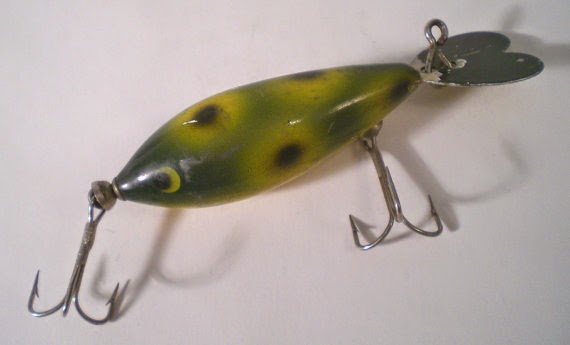
Introduced in the 1940s (there appears to be some conflict about the exact year) as a flyrod lure, the baitcasting version that we know today appeared a year or two later. Sometimes referred to as the "baby boomer lure," the Arbogast Hula Popper got its name from the sound it makes and from the skirt that is part of its make-up. Incidentally, the original skirt actually was patented in 1938 for use on the Hawaiian Wiggler spinnerbait. With its spitting action and popping sound, the Hula Popper serves as an effective sight-and-sound lure around weedbeds and sunken logs. It comes in approximately 11 color patterns (the green frog pattern with white or yellow belly is the most popular) and four sizes, ranging from 3/16 to 5/8 oz.

The best time to throw a Hula Popper is anytime from when the water warms enough in spring to generate a little topwater action and continuing until the end of autumn. This bait works well in calm water over any depth. However, there is plenty of evidence to show that it also can hold its own in rough water. And while many folks only use topwater lures during morning and evening, this one, according to a host of seasoned anglers, can be used effectively all day long.

Ask any 10 anglers how to fish the Hula Popper and you're apt to get an equal number of slightly varying suggestions. You might even have a couple of them tell you to forget it and just fish a Pop-R. Therefore, I hope you'll understand why I'm trying to take a middle-of-the-road approach here.

Considering that the intent is for your Hula Popper to imitate a wounded minnow or frog, most will recommend you make a cast and let it sit until all the rings have subsided, then twitch and pop it back to the boat with pauses of varying lengths in between. You can use light twitches or sharp ones. If you're looking for a reaction strike, use some really aggressive twitches. Let the results tell you which style the bass want. Just understand that the more aggressive you get with your twitches, the more pronounced the strikes are likely to be, so make sure you keep a firm grip on that rod handle at all times.

I also found some anglers who say they like to work this lure by just slowly reeling it along without any pops or spitting. In this situation, the cupped mouth acts as a resistance, creating some side-to-side movement. That action, coupled with the swaying skirt, can attract some strikes that'll last you a lifetime.

An important point to remember when using a Hula Popper is that you're fishing a topwater lure, so it's in your best interests to use a line that floats. If you use monofilament, it'll usually cause the lure's nose to sink, and you'll subsequently lose some action. You also might consider adding a split ring to the lure for increased side-to-side movement.

And finally, don't let missed strikes persuade you to keep moving down the shoreline. Instead, stop and make two or three more casts to see if you can't perhaps "tease" the fish into another strike.

For more than 60 years, the Hula Popper has been giving anglers an adrenaline rush. I still carry a couple in my tacklebox and use them on those days when I see fish feeding on top but all my other topwater baits have failed me. My personal preference is the loud sound you get with an aggressive twitch, which I used in the strip-mining pits back home. I have only one piece of advice, though: Keep a resuscitator handy, 'cause the reaction strike from even a single whopper truly can be a "heart-stopper."

Tuesday, March 17, 2015

A Custom-Painted Crankbait Saves My Day


With a predicted high in the 70s today and a lot of forecast highs in the 40s over the next several days, I wasn't about to sit on my duff and not get in my licks one more time before the nasty winter stuff arrives again tonight. I hit West Neck Creek about 8:30 or 9 o'clock this morning and went straight to my favorite point, which promptly thumbed its nose at me, just like it did during Saturday's tournament.

After spending a little better than an hour in West Neck without so much as a smell, I decided to follow my friend, Skip Schaible, down to Albright's. I took the cut-through, came off step and killed the outboard as soon as I hit the creek, and started fishing my way to the mouth of Albright's.

By 2:45, I had boated a total of two bass. My best was the one pictured here, which tipped the scales at 1-7. The other one came in at 1-3. Both fish fell for a Strike King 1XS crankbait I had custom-painted a year or two ago by Tim Hughes.

Dead bluegill still dotted both areas I fished today, and I also saw a dead bass just as I was quitting this afternoon. Hopefully, this situation will run its course in short order.

Before coming home today, I learned that both Skip and Ray Scott experienced skunks today. Charlie Bruggemann, however, told me he had a good day. He'll likely have his blog updated with today's results sometime tomorrow. If you're interested, here's the link: http://vbfishguide.blogspot.com/.

Incidentally, if you haven't been to the water in recent days, you might like to know that the water is clearing up nicely. Albright's is nearly back to its usual color, and West Neck isn't too far behind.

In closing, let me leave you with some websites I have come across in recent days. These sites afford some ideas about the kind of baits you should be throwing at different times of the year--in both clear and muddy water. Here's the list:

http://wired2fish.scout.com/story/1465421-bass-fishing-lure-selector-chart

http://assets.espn.go.com/winnercomm/outdoors/bassmaster/pdf/BASSToday_SeasonalGuide.pdf

http://bestbassfishinglures.com/

Hope you find these sites helpful.

Till next time, Tight Lines!


Wednesday, March 18, 2015 Update: Following our fishing trips yesterday, Charlie contacted Chad Boyce, the local Virginia Department of Game and Inland Fisheries (VDGIF) rep, about the dead fish we all had seen. I thought perhaps some readers might like to hear what Chad had to say.

"I'm not sure why you are seeing the bluegill now...unless they are in the same boat as the speckled trout. I guess it's possible the extreme cold water for such a long time has them in a catatonic state, and they simply could be dying of malnutrition. I really find it hard to believe that oxygen levels are low enough to cause a kill. I'm not too worried about just a few, but please let me know if you see any more dead fish. But ultimately, if we do have a major kill, there's not much we can do, other than document it for future years."

In the same email note to Charlie, which he graciously shared with me, Chad talked about a shocking the VDGIF did in the canal at Back Bay Landing today to collect some fish for the freshwater exhibits at the VA Aquarium. Said Chad, "We saw a lot of bass, and, surprisingly, a lot were paired up. They aren't close to spawning, but they are starting to think about it. (There were) a lot of 3-to-4-pound fish, nice and plump.

"Also of note, we saw the first white perch today, as well--first 'ripe' white perch, that is--getting ready to spawn. Yellow perch appear to be done with their spawn, as we saw very few females, and the ones we did see were 'spent'--spawned out, eggless.

"Surface water temp in the canal was 51 degrees F."

Saturday, March 14, 2015

A Soggy, Windy Season-Opener


We started the day in our rain gear, and we finished it the same way. And while the wind wasn't bad this morning, it kicked into high gear this afternoon. Nevertheless, those 11 contestants in 6 boats stayed with it. In all honesty, though, I don't think any of us were sorry to see the day end.

With the light turnout, we only paid two places today, along with, of course, big fish and the mystery weight.


Standing tallest at the 3 o'clock weigh-in was this duo of (from left) Wayne Hayes and Jared Allbritten, who captured 1st place with a five-fish limit weighing 10.31 lbs. Their big fish weighed 2.75 lbs.


Coming in 2nd today was Chris Fretard, who finished the eight hours of competition with five fish weighing 9.74 lbs. He also captured big-fish honors with a bass weighing 3 lbs. even.


Winners of the mystery-weight drawing were the team of Al Napier (right) and Allen Napier (not pictured). Their four fish, weighing a total of 8.36 lbs., was closest to the drawn weight of 7.60 lbs. They had a big fish that tipped the scales at 2.68 lbs.


Here is how everyone else finished:

     * The team of Martin Carey and Craig Jones, three fish, 3.83 lbs. total weight, 1.34-lb. big fish.
     * The team of Mitch Portervint and Skip Schaible, one fish, 1.42 lbs. total weight, no big fish.
     * The team of Rob Chatham and Ken Testorff, one fish, 1.38 lbs. total weight, no big fish.

Overall, the anglers today weighed a total of 19 bass for a total weight of 35.04 lbs. This figure translates into an average weight of 1.84 lbs.

For planning purposes, our next event is scheduled for Saturday, March 28, from safe light (about 7 a.m.) to 3 p.m. Registration will close at 6:30 a.m.

My thanks go to everyone who showed up for today's season-opener, despite the dismal weather. Let me also say it was nice seeing Gary Coderre, who has been recovering from a painful job-related injury. With any luck, he'll be back among the line-up of competitors on hand for the next event. Till then, Tight Lines! to all.

Tuesday, March 10, 2015

Another Lure With a Knack for Catching Big Fish

Here's how one angler likened the retrieval of this lure: "It's the equivalent of doing 20 curls with a 20-pound barbell on your arm." Then he added, "You can imagine what it's like trolling with one of those suckers." The angler, of course, was referring to a Hellbender lure.

Some of this bait's history seems to be in dispute if you take what you find on the Internet at face value. For example, I found one source that says the famous Hellbender first started showing up in tackleboxes in the late 1950s. In another instance, though, there was some indication it only dates back to the 1960s, when it was owned by A. D. Manufacturing Co., a division of Hawk Fishing Lure Co. Whopper Stopper then acquired ownership and, about 1983, sold it to Heddon, which was bought by the Pradco family in 1984.

In yet another reference, it alleged the Hellbender was invented in Sherman, TX, and originally belonged to Whopper Stopper, then went to Heddon before being being sold to Pradco. There was no mention whatever of either A. D. Manufacturing or Hawk Fishing Lure Companies.

One fact that seems to be in agreement is that three sizes initially made up the Hellbender family: the 1000 series weighing 1/4-oz. and measuring 3 inches, the 1100 series weighing 1/2 oz. and measuring 3.75 inches, and the 900 series weighing 5/8 oz. and measuring 4.5 inches. Eventually, the 800 series magnum came along, weighing 7/8 oz. and measuring more than 5 inches.

Judged by both expert and novice in their day as the best deep-running, floating and diving lures for casting, trolling and spinning, the Hellbender was molded of Tenite plastic. They were advertised to "run true on retrieve" and to have an "action-producing wiggle plate, plus the added attraction of a spinner on the rear, making it irresistible."

Because of its unique construction, the Hellbender could be fished in many ways under different conditions. With its floating and deep-diving qualities, it was a natural for trolling, as depth could be controlled by length of line and speed of the boat's motor. The lure was at its best when bumping or running just above the bottom. If greater depth was needed, all you had to do was add a weight about 18 inches ahead of the lure.

Users were encouraged to troll over the same area where they had caught a fish at least twice. If they got a second strike or fish, they were urged to anchor within casting distance and work the area thoroughly, "as it is possible you have found a school, and several more fish may be taken if they are not spooked."

The Hellbender was advertised to be "deadly" when used as a casting lure. According to an old guide (from which the photo at the beginning was taken) for the lure I found online, "Running depth is governed by the speed of retrieve. In fact, it can be worked as a topwater lure by retrieving in twitches of the rod tip, causing it to dive under with a wiggle and float back to the top on a slack line.

"It is common knowledge that most game fish frequent cover, such as brush, stumps, logs, rocky shores, and weed beds. Such places are best fished with the Hellbender by casting past the cover if possible. Start with a fast retrieve to make the Hellbender dive, then slow the retrieve when passing the cover.

"In casting to the shoreline, the Hellbender will dive and follow the bottom contour until it reaches its maximum depth. Do not be afraid of casting the Hellbender in heavy brush. With its broad wiggle or diving plate, it will bounce off of, or flip over, most obstacles. But should it hang, give the lure slack line, and in most cases, it will float free, allowing you to continue the retrieve.

"Points, drop-offs, and underwater ledges or high spots may be fished with the Hellbender by casting to the shallows and retrieving to the deep water much the same as shoreline, allowing the lure to follow bottom contour to the deep water. It is sometimes more effective and desirable to cast from the more shallow water to the deep water, and in this case, retrieve the Hellbender fast until it hits the ledge or bottom, and then slow the retrieve." Thus concluded the guide but not the usefulness of the Hellbender.

In the mid-1980s, with the increasing popularity of striped-bass fishing, the magnum-sized version of the old lure took on new life. Anglers not equipped with downriggers started sorting out their Hellbenders. They tied a separate 2- or 3-foot length of line to the back end of the lure, attached a jig to the end of that line, and had a sort of poor-man's downrigger that would get down to the schooling stripers.

Although the Hellbender has, through the years, proved to be a good bass lure in its own right, an overwhelming number of stripers were getting hooked on the jig. Some fishermen even removed the hooks from the lure, using it strictly to drag a jig into the depths. The rig didn't hang up as much that way. One old battered lure was accomplishing as much as an expensive downrigger.

Problems arose, though, when the stripers moved deeper than 50 feet, as they often do during the summer months. The factory Hellbender couldn't reach that depth.

Someone at Whopper Stopper, however, solved this problem. The first step was to remove the connecting link from the diving bill of the hookless lure. Next, 20-to-25-pound line was threaded through a slip sinker (the heavier the weight, the deeper the lure would go). Then the line was threaded through the grommet in the diving bill and tied to a split ring. The line connecting trailing lures then could be tied to the split ring. Whopper Stopper recommended experimenting with different weights to determine what sizes would force the Hellbender to the desired depth. It was determined that, when trolling the angler's favorite lure tied on and running 10 to 20 feet behind a downrigger Hellbender, depths of more than 75 feet could be attained.

Over the years, the Hellbender, with its unique heart-shaped diving lip, has held many state and world records for most freshwater species.

Monday, March 9, 2015

Nasty Water But a Few Fish, Too


It had been too long, so this ol' man had decided today was going to be his day for getting back on the river. It was 10 o'clock by the time he finally got there, but on the water he did go--uh huh, uh huh.

It actually had been far too long since the last trip, and as usual, when that's the case, I found myself forgetting a bunch of things and having to retrace my steps until I finally got everything in the boat and shoved away from the dock this morning. I just kept telling myself to take it easy and not let all these little annoyances take me off my game.

And as you can see here, it seemed to work, as evidenced by this 1-10 bass that I caught a few minutes past 2 o'clock today. This fish was my best of the day, but I did catch a 1-6 bass about 40 minutes after I launched this morning, and I also missed a strike in between these two fish.

The water color was off, as you would expect after the weather we've had lately, and, too, there was a bunch of stuff in the water. I kept dragging up things all day with my Bomber Square A, and it was the kind of stuff you had to stop and remove by hand. It wouldn't come off no matter how hard you slapped the water with the lure.

While I'm thinking about it, probably had better let everyone know that another channel marker is down in the creek. I'm not real sure of the number but, as I recall, it's in the vicinity where No. 7 should be. It's on the right side, headed out of the creek, and I urge you to be careful, because all you could see today (with the water level a little less than normal) was about 4 inches or so of the old post. If you're not really familiar with West Neck Creek and its markers, I would urge you to be careful when you're running in that vicinity, or you might incur an early-season casualty.

Some other folks joined me today, but I only conversed with a couple of them before the day was over. I talked to Charlie at the ramp when I came in, and he had boated 4 bass--the biggest a 1-3. However, he also told me he had foul-hooked about a 7-lb. carp today that evidently had taken him for quite a ride. Skip also was out today, but he ended the day with nothing to show for his efforts.

When it came time for me to put my bigger Skeeter on the trailer today, I made it a point not to repeat my episode of the first such evolution--jumping the nose stop. However, I went a little too far in the other direction, and ended up having to winch the boat up to the stop. Perhaps my third trip with this boat will be the charm that I'm looking for. One thing is certain: I'm doing my best to err on the side of caution.

Today likely will be my only trip to the water this week before our first scheduled tourney of the new season this coming Saturday, 'cause a few other things are begging for my attention. My hope is that, if it really has to rain, as the forecasters are all saying, it's only intermittent at worst. I truly hate sitting through an all-day rain.

Saturday, March 7, 2015

My Best/Worst Fishing Day Ever

I'm sorry to say, folks, but it looks like I had another idea that flopped. I ended up hearing from only two fishermen who were willing to share their experiences. Nevertheless, I'm going to proceed with this project, so that these two anglers' efforts will not have been in vain.

Before I do, though, I would like to thank Jim Funk for posting an ad on the Region 7 website, asking for inputs from those fellas if they were so inclined. Really appreciate your help, Jim.

That being said, here is the information I received.

My Best Day

My friend Jerry's best bass-fishing day was when he was about 12 or 13 years old. "This was the 'trip' that really hooked me on bass fishing," he said.

"I lived in the town of Williamston, NC, and one day, I rode my bike to Conoho Creek, a distance of about 3 miles from where I lived. I was bank fishing, tossing a topwater Rebel across the mouth of the creek into the Roanoke River.

"There was a 'boil' of feeding bass in that area, which was just barely within my casting range. I don't remember how many I caught that day, but I had a stringer of huge bass that would drag the ground. I had my hands full figuring out how to drape the stringer on my bike before heading back to town. What a day of fishing!"


One of my friend Skip's best bass-fishing days occurred at West Neck Creek. It was overcast at the time, and just as had been predicted, afternoon storms were moving in from the west.

"I could see lightning and hear thunder in the distance," said Skip, "so I figured I would head back. As I almost was to the mouth of the creek, I noticed a guy catching fish as fast as he could. I slowed down, and he told me to pull in behind him and start throwing a white spinnerbait.

"On my first cast, I had a fish on. With the lightning and thunder drawing ever closer, I knew it was dumb to stay out there, but we both kept fishing. And on every cast, we both would catch a fish. We stayed put until the storm eventually passed below us.

"I have no idea how many fish we caught, but for that 15 minutes, it was non-stop action. As soon as the sun popped out, though, the catching came to a dead stop. I've never seen anything like it before or since," Skip concluded.

My Worst Day

Skip also provided an input for this category. It involved a trip he hook with a buddy years ago. At the time, Skip had a bass boat, and his friend owned a saltwater boat, which they used according to the type of fishing they were going to be doing on a given day. On the day in question, they were in the buddy's boat.

"Our standing rule," explained Skip, "was that, unless one of us was bleeding to death or suffereing from compound fractures, there would be no turning back. We were headed to the lighthouse off the coast, and as soon as we pulled out from the Lesner Bridge, I got seasick. I 'chummed' all the way out and back.

"True to our rule, though, we did not turn back. I cannot remember if I caught any fish. I just remember how bad I felt. That was the only time in my life I have been seasick. The strange thing is that it wasn't even rough that day."

Too bad you didn't have some saltine crackers, Skip. I quickly learned on my first Navy cruise, thanks to an ol' bosun's mate, that nothing will cure seasickness faster than some of those crackers. After the first day of that cruise, I was fine, but I always kept a pack of saltines in my locker, just in case.


My personal worst fishing day ever has to be a tournament several years back that I fished solo out of West Neck Marina (back when Dewey was running things). I had the winning total weight, as well as big fish. There was just one problem: I returned to the scales for weigh-in an hour late.

Did my watch stop? No. Had I misunderstood what Dewey said about weigh-in time that morning? No. Did I have boat trouble? No. The simple truth is that, after having put the winning weight and big fish in my livewell within the first three hours of fishing, I somehow "twisted" the appointed hour of return in my head.

Bottom line: I walked away with nothing, when I could have walked away with it all. I went ahead and weighed my fish when I came in, and a quick comparison with the final tally sheet conclusively showed I had the best total weight and big fish--it just didn't count.

Thursday, March 5, 2015

Mudbugs: Diggin' for the Big 'Uns

Haven't owned one of these since the early '70s, mainly because I couldn't figure out how to mount a winch on the front of my boat to crank the lure back in after making a cast. All kidding aside, this is one of those lures that'll put you at parade rest if you throw it very long.

I gave the only two or three I ever had to my pop, who was a hoss of a man in his prime. He used 'em a bit in the strip-mining pits around my hometown but, like me, quickly concluded they weren't worth the effort you had to expend while using one.

It's abundantly evident, however, that not everyone shared our conclusions about the mudbug. From the moment this lure was introduced in 1968, it created quite a stir. It resembled a crawfish in appearance, even to the extent of being retrieved backward, to simulate a fast-moving or retreating crawfish. A winner in numerous bass-fishing tournaments, this deep-diver was available in five different sizes for fresh and saltwater fishing by 1980.

The man responsible for bringing this lure to the market, of course, was none other than Fred Arbogast, one of the true pioneers of the fishing-lure industry. As true of so many who have entered the lure business over the years, Arbogast first got into it as a hobby.

He started out carving lures for himself and friends while employed by the Goodyear Tire and Rubber Co. in his hometown of Akron, OH. As his lures began catching on with area anglers, some local tackle-shop owners started asking if they could buy the lures to sell in their stores.

Arbogast soon realized he was on to something, and armed with this newfound popularity and confidence in his lures, he resigned from Goodyear and, in 1926, entered the lure business in earnest. Two years later, the Fred Arbogast Co. officially was borne.

The Arbogast mudbug, a cousin of the old Bomber, is one of the all-time favorite crawfish-imitating crankbaits. It's also one of the first baits to have a lineup of colors that included chartreuse--a hot item in tackle stores across the country at the time.

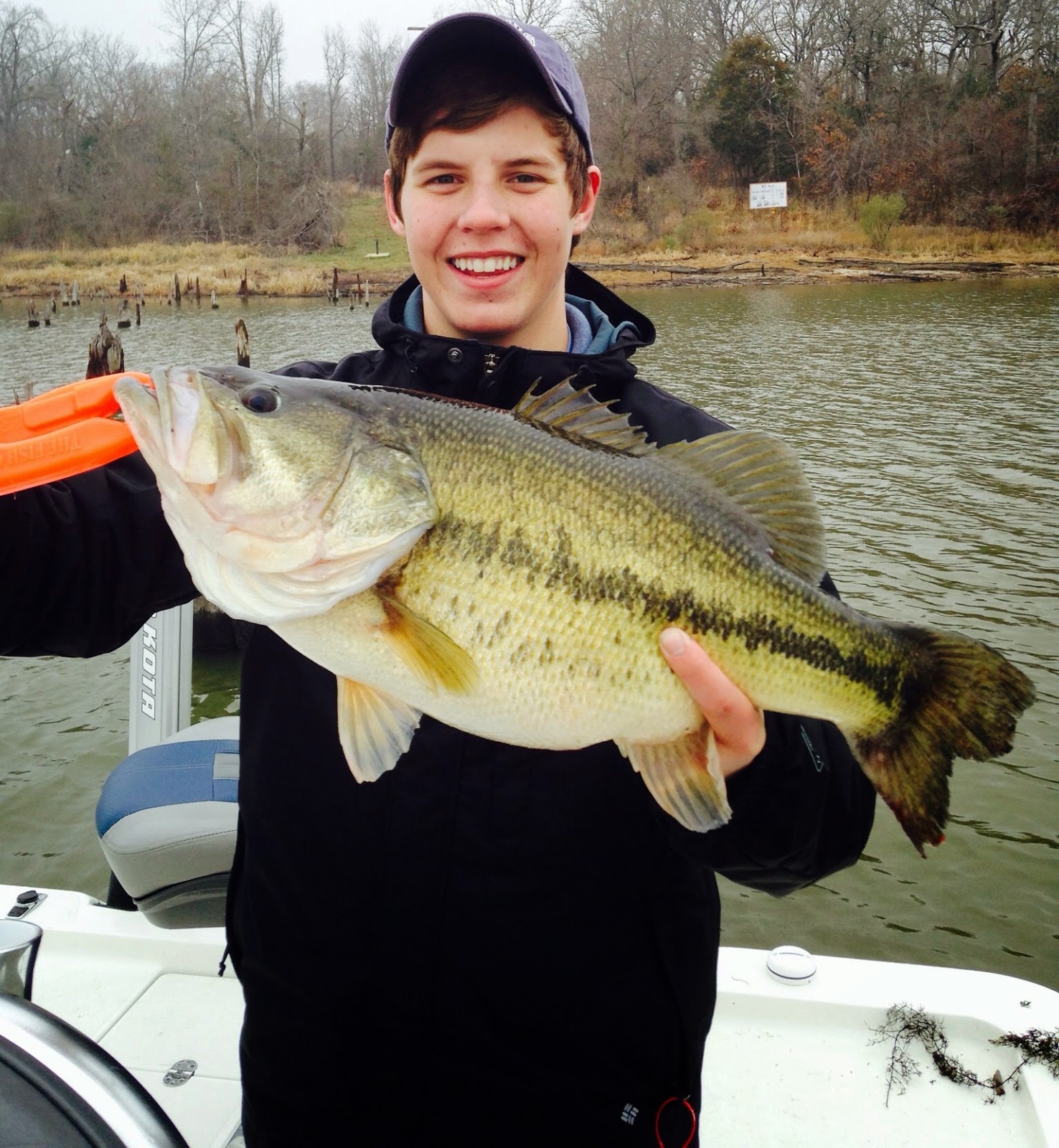
Its wide wiggle, with a quick-diving angle, created a hard-vibrating action and enabled the mudbug to bump the bottom in 8 to 10 feet of water. Once on the bottom, this metal-lipped bait (one of only three in existence at that time) stayed put, stirring up the mud and attracting bass (hence its name). This unique action made it a big-fish favorite of serious anglers (see accompanying photo of a young lad with his 7-lb. 11-oz. bass he caught at Lake Fork on a mudbug). Now it's a favorite attraction among collectors everywhere. The lure's floating ability allowed it to back out of heavy cover on a slack line, eliminating potential hang-ups, where old metal lures wouldn't.

Mudbugs were a proven winner when it came to early-spring fishing, a time when big bass are in a pre-spawn mode and crawfish are starting to appear. Old-timers believed heavy line was a must when fishing this lure, regardless of which model you were using. (The model no. G22 weighed 5/8 oz. and was a favorite for big-bass fishermen who wanted to stay in contact with the bottom. Meanwhile, the model no. G20 weighed 1/4 oz. and was designed to fish depths of 4 to 6 feet.)

According to an online account by writer-fisherman Dan McGarry, the mudbug is best used in two situations. "Put your boat in 3 to 5 feet of water and cast out into 20 feet or deeper (the most effective range is weeds in 10 to 15 feet of water)," he said. "Try to cast at a 45-degree angle to maximize lure coverage and to not drive your partner crazy. As you move along, pay attention to when and where strikes occur--very rarely do you only catch one in an area. Every time you cast, pay attention to anything that will give you a reference point to return the bait to the same area.

"Crank the bait about six or seven good, hard turns down, then slow up when you feel the bait strike weeds, rock, brush, or bottom. Stop and count to three; you will feel the bait moving away and up. A bass will just blast the bait, or it will feel like a worm hit--he'll just swim off with it in his mouth.

"One thing that always happens is the best bass will hit as the bait starts its arc up from the bottom, or at the end of the retrieve. And they always swim to the boat with a little inside-outside roll. Rod position is very important to avoid fatigue. Keep the rod low, and only put slight pressure on the rod by changing the angle and using the reel to winch the bait along."

The second ideal situation in which to use a mudbug, according to McGarry, "is exceptionally windy days, when a jig bite is hard to feel. Fish upwind, making long, low casts along the bank, on rocky flats in 3 to 6 feet of water. I just have the (trolling) motor on high and buzz the bait along, allowing it to bounce and deflect off of every object. The final mudbug method I use is the ricochet method, in which I take the bait and purposely try to crash it through shallow-water and deep-water thick cover. Bass will turn down worms and jigs to blast an alien monster that slams into their tree."

The mudbug is no longer available, but it can be found for sale on eBay and other auction sites. Get one and try it, if you haven't already. The mudbug is just one more Fred Arbogast lure that has brought pleasure to fishermen all over the world.

Wednesday, March 4, 2015

What's Not to Like About a Lazy Ike?

Somewhere around the mid-1930s, in the Fort Dodge, IA area, a fisherman named Newel Daniels was hand-carving what was to become the Lazy Ike. History has it that Joseph Kautzky (also spelled Kanutzky in some sources), Jr., of the Kautzky Manufacturing Co. (forerunner of the Lazy Ike Corp.), saw Daniels fishing the lure, liked it, and struck a deal with him.

From 1938 to 1940, Daniels produced lures for the company by hand. When he left, he turned over all rights to Kautzky, who then shifted responsibility for production to "Pop" Shuck, who kept making the lure by hand until about 1945, when lathe production came along. Wood production stopped in 1960, when a plastic version of the lure was introduced.

Kautzky produced several baits; however, the Lazy Ike was the most famous. It and the other Kautzky lures generally aren't considered collectible.

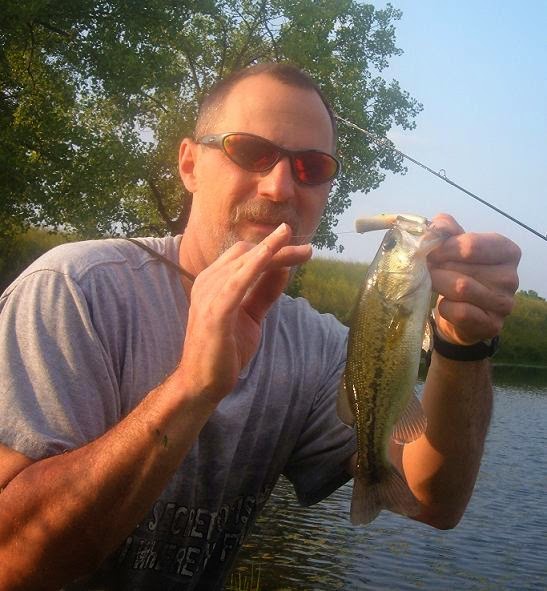
Lazy Ikes evidently still are in production, because multiple colors are available from http://www.lurenet.com, as well as other online websites, including eBay. And the bait, with its pronounced wiggle, still is catching fish 80 years later, as evidenced in this photo.

The fisherman involved here caught six bass this particular day with his frog-colored Lazy Ike, all of them ranging between 2 and 4 lbs. "It was like the '60s all over again," he said. He also was heard to describe his day as "not so good," which leaves me to wonder what he considers a good day.

Sure looks like there's something special to be said for that frog-colored Ike. For example, I also read about a father-son duo who were fishing one in a Missouri farm pond, with a storm rapidly approaching. Lightning and thunder warned that their fishing was about to end, but that didn't stop the son from making just one more cast.

"I cranked the reel handle a few times," said the boy, "and then my frog-colored Lazy Ike stopped as though it had hit a brick wall." He told his dad, who then started watching and offering advice, as the boy tried to gain control of the situation.

"When the huge bass was close enough to see," the boy explained, "the gears in my spincast reel locked up, and I was powerless to bring the fish any closer." He glanced over at his dad, who already was taking off his shoes and socks to go wading. His dad was in waist-deep water before he could lift the fish up and carry it to shore. The duo took the fish to a local hardware store, where it tipped the scales at 6 lbs. 10 ozs.

As reported in an account by Troy Jackson, "The Lazy Ike ranks among the heavy hitters of all-time when it comes to artificial lures... . This odd-looking creation with a wiggling action has likely caught millions of fish and anglers alike."

Jackson went on to explain that he found one of these baits on an endcap in a department store during the summer of 2014 and bought it for $1.50. "Sure didn't take long to get a return on my investment," he said, noting that within minutes of making his first casts with the lure a few days later, he caught the bass pictured here.

"I can't imagine that this thing is a staple in tackleboxes these days," Jackson continued, "as I've never seen anyone throw it. The $1.50 sticker price I paid speaks volumes as well, especially in a world of ever-increasingly outrageously priced lures, none of which I imagine have truly revolutionized our hobby... . However, the fact that I can pick up a lure that first hit the market during The Great Depression in a modern superstore has to count for something. In the end, it is simply a cool feather in my floppy hat to say that I caught a bass on a lure that my grandpas probably had in their tackleboxes as well."

The banana-shaped Lazy Ike and its big brother, the Mighty Ike, swim with a huge, searching "X" action, resembling a minnow in distress. They primarily attract walleye, bass, northern pike, and musky. Trolled (to depths reaching 11 to 13 feet) or cast (to depths reaching 4 to 6 feet), the lazy roll of the Ike has created fishing memories for generations of anglers.


Would like to thank my buddy, Charlie, for his comment on this article that I received in an email earlier today (Thursday, March 5). Also want to include some info he provided in that same note. "When I was a kid, spending my summers in Vermont," he said, adding, "we all used a Flatfish, which is almost the same thing. Northern pike were the target species back then. I have one in my tacklebox somewhere and might have to get it wet this spring.

"Around 1956," continued Charlie, "an old fisherman showed me his secret lure (see accompanying drawing, which Charlie acknowledged is 'bad')." Here's how it's made: Take two swivels and connect them with a split ring. Add a blade to the split ring. Put another split ring at the end and attach one long-shank and one short-shank hook, with the points facing each other. "Next, we would catch leopard frogs early in the morning," said Charlie, "then head out to the water. "We'd hook the frog through the lips on the short-shank hook and let the long-shank one ride free between his legs. That thing would fill the cooler in no time flat. Great times!"

Tuesday, March 3, 2015

It Had Its Beginning in a Styrofoam Egg Carton

I'm talking, of course, about the Big O, the balsa-made crankbait that started the whole alphabet-plug frenzy of the 1970s. And to set the record straight, it really wasn't "born" in an egg carton. That's just how the somewhat fragile, hand-carved lure originally was stored--to protect it from getting scratched.

A pioneer in crankbait design, Fred C. Young of Oak Ridge, TN, created the Big O in 1967. The story goes that he just started whittling on a piece of wood one day and decided he'd try to make a fishing plug. Young had plenty of spare time on his hands at that point, because he was in a body cast, as a result of injuries he had sustained while working for the Atomic Energy Commission in Oak Ridge.

Visits to his doctor provided an opportunity for him to stop at a lake on the way home to test his prototypes. He was looking for a fast, tight wiggle, and of all the woods he sampled, balsa was the only one that gave him such an action. Meanwhile, old pieces of circuit board proved to be the best material for making a lip.

Field-tester for Young's plug was his brother, Otis, nicknamed "Big Otis" because of his 6-foot 6-inch stature (hence the name Big O). With his brother's suggestions for improvement, it wasn't long before Fred had a design that, according to some, "was wearing the fish out." And while there were those who poked fun at the plug, Otis urged his brother to maintain the fat-bodied design because of its natural vibration.

It also wasn't long before an angler named Bill Nichols was using Young's creation to win some club tournaments. Noted smallmouth legend, Billy Westmoreland, first saw the Big O (which he dubbed "the homemade plug") during a fishing trip with Nichols and subsequently got one of the plugs from Young. A regular trading session soon emerged between the two, with Young swapping a couple egg cartons (consisting of five or six plugs per carton) for two or three dozen of Westmoreland's hand-tied jigs.

"The homemade plug" soared into national prominence in the spring of 1972, when Westmoreland took it to a B.A.S.S. tournament on Lake Lanier. He cranked his way to a second-place finish with it in that event, with Bobby Murray barely nudging him out of the $10,000 first-place prize on the final day.

Now that "the cat was out of the bag," demand for this hand-carved plug skyrocketed to levels that Young couldn't come close to satisfying. That demand, coupled with the Big O's newfound reputation for "killing bass," led some enterprising entrepreneurs to start a rent-a-lure program. Frustrated tournament anglers didn't hesitate to fork over $25 a day and another $25 insurance deposit, in case they lost the bait.

That high demand continued into 1973, when the Big O was selling for $10 to $15 apiece before the B.A.S.S. tournament at Watts Bar. The going price after that event had climbed all the way to $50 apiece. The plugs were so hot that, as Westmoreland complained, "They're cutting my line and stealing them off my rods."

At this point, the Cordell Lure Company of Hot Springs, AR, saved the day by buying Fred Young's Big O brand and mass-producing a "fat plug" with plastic bodies. Young oversaw the design of this knock-off model, which soon flooded the market and filled trays in the tackleboxes of anglers everywhere. Records show that, within 13 months, Cordell had sold 1.3 million plastic Big O's.

It should be noted here, however, that, prior to selling rights to his famed Big O, Young carved, signed and numbered each of the more than 3,700 plugs he made. Many of these ended up in the possession of Bobby Murray, who, along with Cotton Cordell Lures, revived the wooden version of Young's original Big O for a limited time (circa 2007-2008). It was only available, though, from Cabela's.

The Big O is a lure that indeed has withstood the test of time and is still being produced today. It's available from many different online websites, including eBay, where you can find collector models in various price ranges.

(Fred Young died in 1987. Cotton Cordell died Jan. 6, 2015.)

Friday, February 27, 2015

What's the Harm in a Little Innocent Innuendo?

I was cruisin' down the Internet highway yesterday when I came across a fella who said he has noticed a change in the "descriptive language of lures." As he explained, "I am seeing phrases like 'a seductive shimmy,' 'sexy action,' 'an enticing wiggle,' 'an attractive color,' 'tempting vibrations,' 'irresistible movement,' and 'provocative presentation.'"

Before reading any further, I decided to have a look for myself. The first example I came across was this photo and its caption on the Virginia Region 7 website (http://www.varegion7.com/) bearing Jim Funk's byline. He had titled the piece "The Other Woman." The accompanying caption read, "Since the weather stinks, and I am lucky enough to have a heated garage, I've been spending some time with 'the other woman.' I've been rubbing on her and fixing trailer-hub issues. I've also organized her. Next, I will remove the passenger console again, for the last time. SPRING, PLEASE COME SOON!"

The next example I found was a Brandon Deaton blog post titled "Big Girls Need Lovin' Too," which, he quickly noted, isn't something it would be smart to say to your girlfriend or wife. After explaining that the "big girls" he's referring to are female bass beginning to think about spawning, Brandon outlines some suggestions anglers should consider before headin' out in pursuit of those girls. If you'd like to see his post, here's the link: http://www.brandondeatonfishing.com/#!Big-Girls-Need-Lovin-Too/c21xo/F893AE17-7CAA-4C95-B725-333E617561FB. Might pay to check it out before the spring ritual arrives.

My last stop yesterday on the Internet highway was when I saw this headline: "Rapala's New Shadow Raps Shimmy Seductively While Suspending." The ensuing article (http://www.onthewater.com/rapalas-new-shadow-raps-shimmy-seductively-suspending/) highlighted the fact this new suspending jerkbait "perfectly mimics a minnow's final, quivering moments before its end of days, triggering unforgettable strikes as predator fish move in for an easy meal." The article went on to say that four of the pros who fished the 2015 Bassmaster Classic were equipped with Shadow Raps, heading into the competition.

As acknowledged by the fella I quoted in the opening paragraph of this post, "I understand there are some similarities between women and bass, such as often releasing many before finding a few worth keeping, inevitable backlashes in the pursuit of them, the testing of one's patience, often being impossible to work with, and being able to so easily entice a man into obsession... . However, I don't find massive mouths, extreme aggression, and the ability to eat something one-third their body size to be attractive traits in women."

He continued, "Are we undergoing a shift in fishing style? Are we done offering false food items, and instead seeking to seduce bass? If so, we should stop using green pumpkin and bluegill jigs and instead throw pink-voltage-lipstick jig heads with a sexy-curvy shad skirt. No more baby-bass crankbaits--you'd be better off with baby momma bass cranks, featuring a sensual shimmy and promiscuous wiggle... . I would go on, but it's imperative I start smearing lip gloss on my swimbaits."

I understand where this fella is coming from; however, I don't share all of his concerns. Quite frankly, I don't see anything wrong with using a little pink in our arsenals. I have been known to use some pink Senkos, as well as pink skirts (wouldn't call 'em "sexy-curvy," though) on my chatterbaits--and successfully, a number of times, I might add. As for getting bass to bite, in general, I'm all for whatever it takes, whether that be enticing, teasing, coaxing, or seducing. If a little innocent innuendo will put fish in the boat, especially on tourney day, so be it.

Saturday, February 21, 2015

Cold Snap Kills Fish Across Virginia, North Carolina

One of the coldest winters the East Coast has seen in years is the culprit in the deaths of thousands of fish along coastal Virginia and North Carolina.

That headline and lead sentence from a WAVY-TV news report sounds like something you might expect from what we've been experiencing this past week. In reality, though, it describes a fish kill that occurred about this same time last year. The date on the report is Feb. 17, 2014. Covering this event was WAVY's Liz Palka, along with her photographer, Chris Omahen (responsible for all photos used here).

One thing that grabbed my attention about this year-old fish kill, other than for the fact I missed it totally when first published, is what's in some of the accompanying photos. Palka's one interviewee (a resident of Virginia Beach) described the kill as involving "large numbers of speckled trout and puppy drum washing up near docks and canals." However, you don't need a magnifying glass to determine that more species than just those two were found in a belly-up state (check the accompanying photos for yourselves).

A marine-recreation specialist interviewed by Palka characterized the fish deaths (called a "cold stun kill"), as "natural." They first started being reported by Mid-Atlantic anglers the week of Jan. 19, 2014. The marine-recreation specialist went on to say, "From the limited data we have, in terms of numbers, it just seems to be on a larger scale this year." The 2014 cold-stun kill was serious enough, though, to prompt North Carolina to ban all recreational and commercial fishing of speckled trout in that state until mid-June last year.

According to my Internet research, the majority of winter fish kills are experienced as cold temperatures cause bodies of water to freeze over. Low dissolved-oxygen levels result from a combination of factors. The air/water interface is capped by the formation of ice, limiting the exchange of oxygen at the surface. This icy cover also reduces or completely eliminates sunlight from reaching any aquatic plant life that otherwise would produce oxygen through the process of photosynthesis.

With no light available, aquatic plant life will begin to respire (consume oxygen), along with fish and other aquatic life and further increase the oxygen demand. The bacterial decomposition of organic material and bottom sludge also depletes oxygen levels.

Over time, the dissolved oxygen levels eventually become too low to sustain aquatic life. This can vary widely, depending upon the type of aquatic organisms living in the water. For most warm-water species, like bass, crappie and bluegill, minimum oxygen levels need to be about 2 ppm. Trout species require higher oxygen levels, typically around 4 ppm. Oxygen levels below this for extended periods of time will prove to be lethal.

Given the record-setting cold temperatures we had this past week, I suppose we very well may soon see another fish kill. As a matter of fact, I heard just a couple of days ago about an isolated case that already has turned up.

The good news is this: Winter kills that occur in larger lakes and rivers rarely are serious enough, in the long run, to do lasting harm, because of the sheer number of fish those bodies of water support. There usually are enough survivors to repopulate all the species. And, too, fish kills sometimes can be beneficial for the fish community by reducing over-populated, slow-growing species.

Nevertheless, fish kills always should be reported. Contact the Virginia Marine Commission at 757-247-2200 anytime you see one.